Chapter 9
Splitting expenses abroad
Each currency on its own, until you record what the payments actually cost.
Anna, Ciarra and Adrian spend a weekend in Singapore. Ciarra pays for a hawker dinner in Singapore dollars she bought before the trip. Anna pays for garden tickets with her Philippine card. Back home, Adrian buys airport snacks in pesos. All exchange rates here are invented.
What you want to end up with
First, a settlement in each currency. Then, if you choose, one settlement in pesos based on what each payment actually cost.
Step by step
Set up the split and all three bills
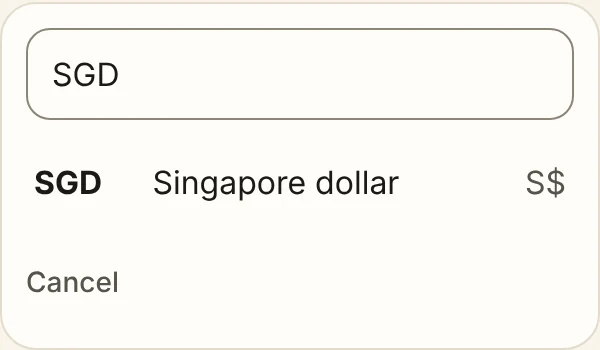
Start a split with Anna, Ciarra and Adrian, then add each bill. For every bill, set its currency (tap the currency next to Amount paid, then search by code, name, country or symbol), enter the amount actually paid, choose who paid, and tap Equally so all three share it.
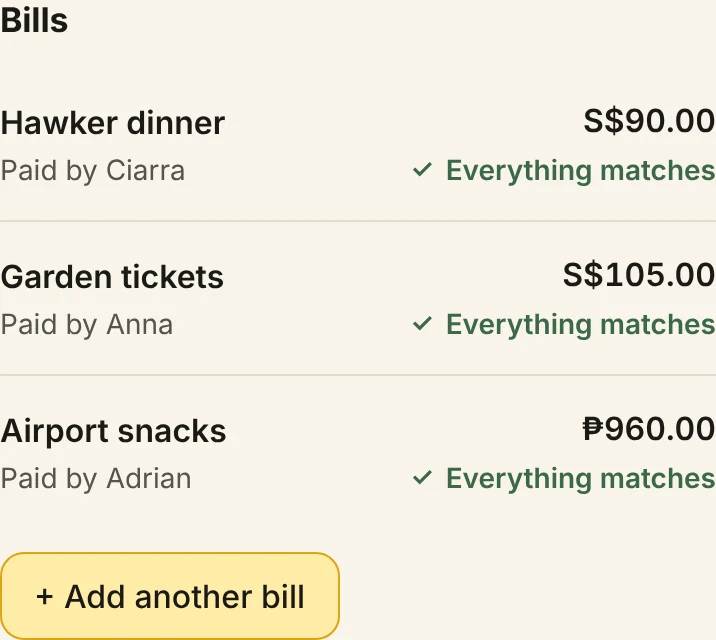
The three bills Bill Currency Amount Paid by Hawker dinner SGD 90 Ciarra Garden tickets SGD 105 Anna Airport snacks PHP 960 Adrian A new bill starts in the currency of the split’s last bill, so check it when you switch back to pesos for the snacks.
Read one settlement per currency
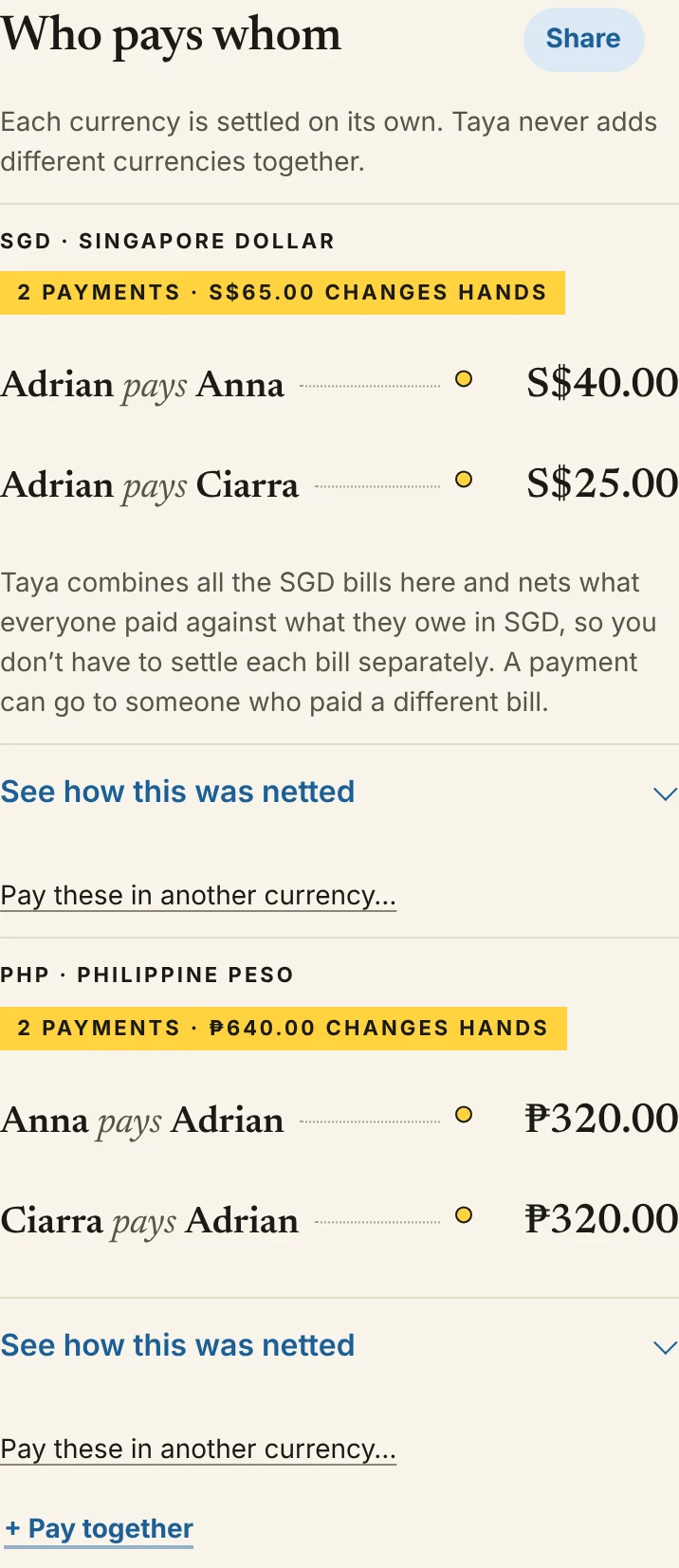
Taya never adds different currencies together. In Taya’s words, “Each currency is settled on its own.” Under Who pays whom, there’s a list for SGD and one for PHP. Share sends both.


Settling the Singapore bills in pesos
Nobody wants to send Singapore dollars at home. Taya can settle the SGD bills in pesos, using what each payment actually cost. Taya never looks up exchange rates; you enter them.
Choose the payment currency
Below the payments under SGD · Singapore dollar, tap Pay these in another currency…, then Choose a currency and pick PHP.
Record a rate someone actually got
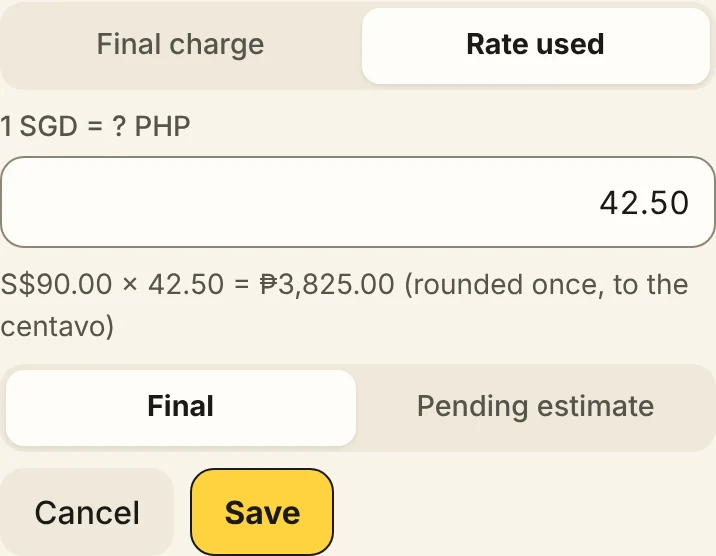
For each payer, tap Enter charge. Ciarra paid cash she had bought at ₱42.50 per dollar, so choose Rate used, enter 42.50, keep Final and tap Save.
Use an estimate until the card charge posts
Anna’s card charge hasn’t posted yet, so she enters an estimate: Rate used 43.80 and Pending estimate. As the form says, “An estimate is shown, but never used for Who pays whom.”
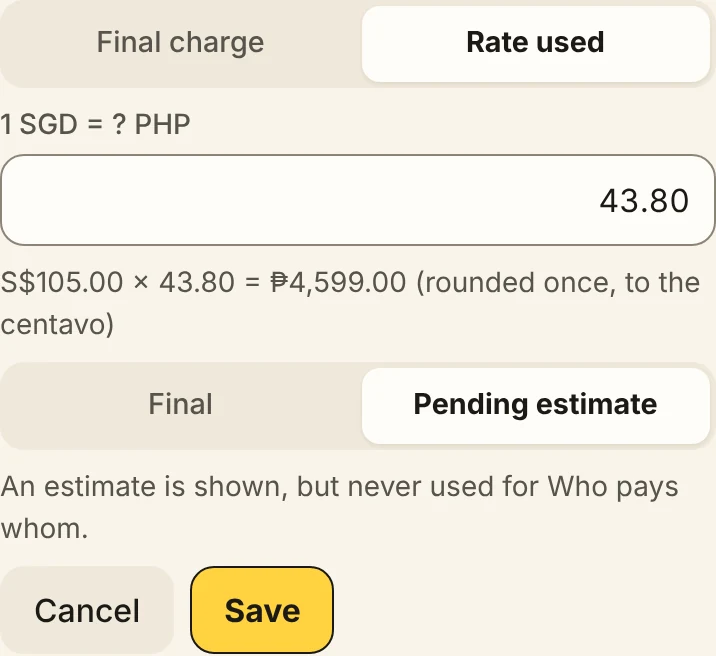
Until every final charge is in, the SGD bills keep settling in SGD, and the peso bill in pesos. Both lists stay valid, and Share is still available.

Enter the final charge
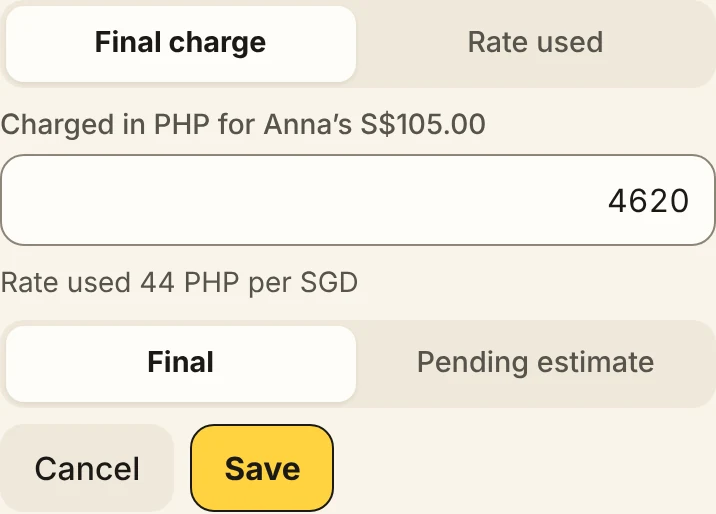
When Anna’s statement shows ₱4,620.00, tap Enter charges on the split, then Enter final charge for Anna. Choose Final charge, enter 4620, choose Final and Save.
Read the combined settlement
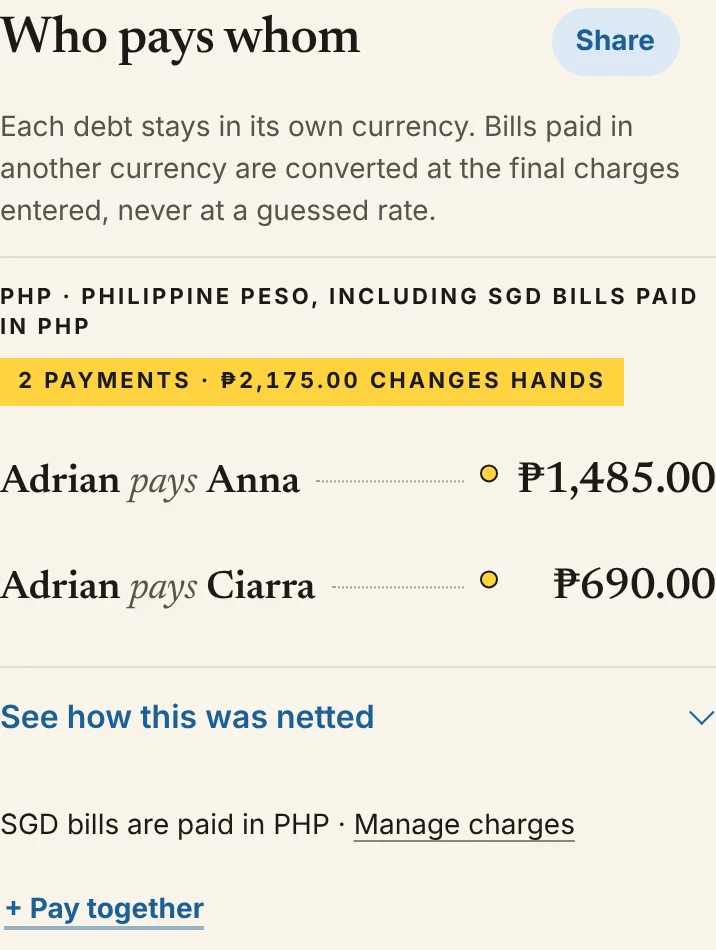
Now everything settles in pesos: Adrian pays Anna ₱1,485 and Ciarra ₱690. The link under the settlement becomes Manage charges, for corrections later.


When one currency is waiting
Each currency settles on its own, so a problem in one doesn’t hide another. If the snacks bill didn’t match its receipt, the SGD payments would still show, and PHP would say what it’s waiting for. Share would wait until every currency is ready.

Why it works this wayHow each person’s ₱3,135 is worked out
Ciarra’s S$90 cost ₱3,825 at ₱42.50, and Anna’s S$105 cost ₱4,620. With Adrian’s ₱960 of snacks, the whole trip comes to ₱9,405 in pesos, so each share is ₱3,135: ₱1,275 of the dinner, ₱1,540 of the tickets and ₱320 of the snacks. Anna paid ₱4,620 and Ciarra ₱3,825, so Adrian, who paid ₱960, pays them ₱1,485 and ₱690.
Why it works this wayRate used, final charge, pending estimate
A rate used is the rate a payer actually got, such as for cash bought earlier. A final charge is what a card or account was actually charged, including any fees. A pending estimate is a placeholder: shown, but never used for who pays whom. Different payers can have different rates.
OptionalSee how the Singapore dollars became pesos
Open Full breakdown on the split. How SGD became PHP shows each bill’s conversion.

Good to knowCorrecting or stopping
Remove this charge takes a charge back out. A final charge can’t be turned back into an estimate; remove it first. Stopping the payment currency asks first, and the charges are kept in each bill’s history.
Try it yourself
- People
- Anna, Ciarra, Adrian
- Bills
- Hawker dinner S$90 by Ciarra · Garden tickets S$105 by Anna · Airport snacks ₱960 by Adrian; all equally
- Pay SGD bills in
- PHP: Ciarra rate 42.50, final; Anna final charge ₱4,620
- Expect
- Adrian pays Anna ₱1,485.00 and Ciarra ₱690.00